

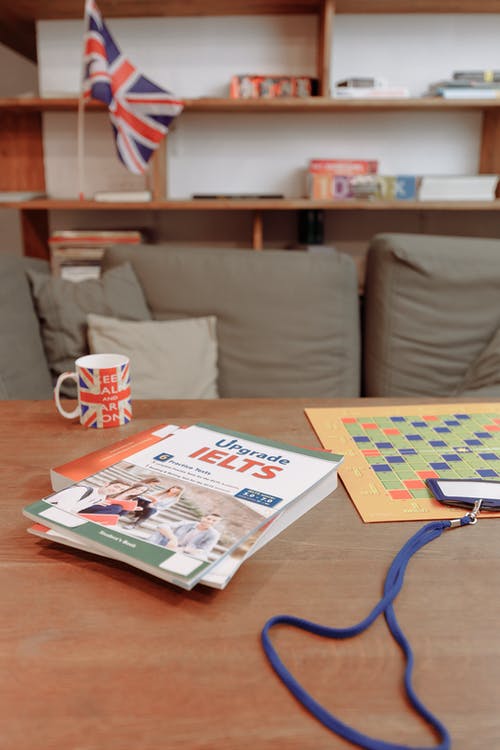
If English is not your native language, some universities in the UK require you to take the IELTS (International English Language Test) exam. Along with this, some students even get a minimum band requirement of 6 in each section (varies from college to college). Your main aim is to score the highest possible in each section in order to not retake the exam. Sometimes, this can be challenging. The format of this exam is somewhat different from those we have given in school previously. So, we have created a guide providing tips & tricks which will help you sail through the exam and achieve the desired band score. We have also put in several useful links providing mock tests & further help to ensure proficiency on your end.
The Blog includes:
1. More about IELTS
2. Tips & tricks for each band
3. Links for mock tests
There are 2 types of IELTS exam – General & Academic. Students who want to go abroad to study opt for the Academic one. The ILETS exam consists of 4 sections – Reading, Writing, Speaking & Listening. Mostly, listening, reading and writing is done on the same day and speaking is done on a different day, they do not necessarily have to be consecutive days. The duration of the test in total is 2 hours 45 minutes. For each section, you will be marked separately and these scores are valid for a time period of 2 years.
The IELTS can be taken via 2 mediums – computer or paper. IELTS on computer has 3 time slots 7 days a week. The results are released within 3-5 days. IELTS on paper has 4 test sloths every month. The results are released within 13 days.
Here are some tips & tricks to achieve the desirable score along with some in-depth details about each section.
IELTS Listening:
About: In this section, 4 audio recordings will be played and you will be allowed to pen down your answers in a booklet. The recordings will be of different accents including British, Australian, New Zealand, American & Canadian – all English native speakers. Keep in mind, these recordings will be played ONCE only so be attentive.
Duration: 30 minutes
Tips IELTS Listening:
– Read through the questions before hearing the recordings, try grasping and remembering the gist of the questions
– Ensure the dates are written in the accepted format
– Sometimes, the recordings are not clear – make sure to raise your hand & ask your invigilator for help
– Familiarize yourself with the different accents of English native speakers as some words and numbers are pronounced differently
IELTS Reading:
About: This section requires you to answer 40 questions divided amongst a set of exercises. The reading segment tests you on a variety of skills – reading for the gist, main idea hunting, reading for details, logical arguments, skimming through the text and understanding the writer’s attitudes & opinions.
Duration: 60 minutes
Tips IELTS Reading:
– Make sure to read the questions before reading the text so that you know exactly what you are looking for while skimming through the text – this will help you in answering questions as you are reading and will help save up on time as well
– If you are unable to answer a question, move forward. Don’t stay stuck on the same question as time is of the essence. Get back to the question in the end if you have time left
– Keep a pencil handy, underline all keywords and important lines
– Pay special attention to spelling & grammar to avoid negative marking
IELTS Writing:
About: In the writing test, you are asked to complete 2 tasks – to describe a diagram & to write an essay in the form of an argument-solution, problem-answer or a letter.
Duration: 1st task – 20 minutes & 2nd task – 40 minutes
Tips IELTS Writing:
– Use sophisticated English language. Refrain from using spoken English
– Task 2 contributes more to your total score, so start with that first and then move on to Task 1
– Ensure your handwriting is readable, neat and tidy so the examiner understands what you have written
– Use complete sentences to answer the questions and only write relevant to the topic sentences else you will be penalized
– Make sure to stay in the world limit given
– Organize your thoughts & ideas. Make a rough outline of what you want to write.
– Avoid using bullet points, use full sentences ONLY
IELTS Speaking:
About: You will be assessed on your ability to communicate. The conversation remains casual. This is divided into 3 sections. First is a general introduction and interview. Second, you will be given a task card with a topic on it – you get 1 minute as preparation time and you are required to talk on the same for 2 minutes. Be ready to answer questions from the examiner after you are done talking. Lastly, the examiner will hold a discussion with you in regards to what you spoke about and other general topics.
Duration: 11-14 minutes
Tips IELTS Speaking:
– Try giving a critical analysis & open-ended answers covering the topic
– Speak fluently and at length, not too fast else your speech won’t be clear
– Listen to the question carefully before you answer
– If the question is not clear to you, refrain from answering it – instead ask the examiner to clarify the question for you
Apart from these tips & tricks, here is a list of a few website links which can help you in preparing for the IELTS exam via mock tests and other study material.
– https://www.english-exam.org/IELTS/
– https://ielts-master.com/
– https://www.ielts-simon.com/
– https://www.ieltsbuddy.com/ielts-blog.html
Always remember, the main purpose of the IELTS exam is to test your ability to communicate effectively and fluently, it is not necessarily to test your general knowledge of the English language. Good luck!
